The PV Yield - what to look out for in solar modules?
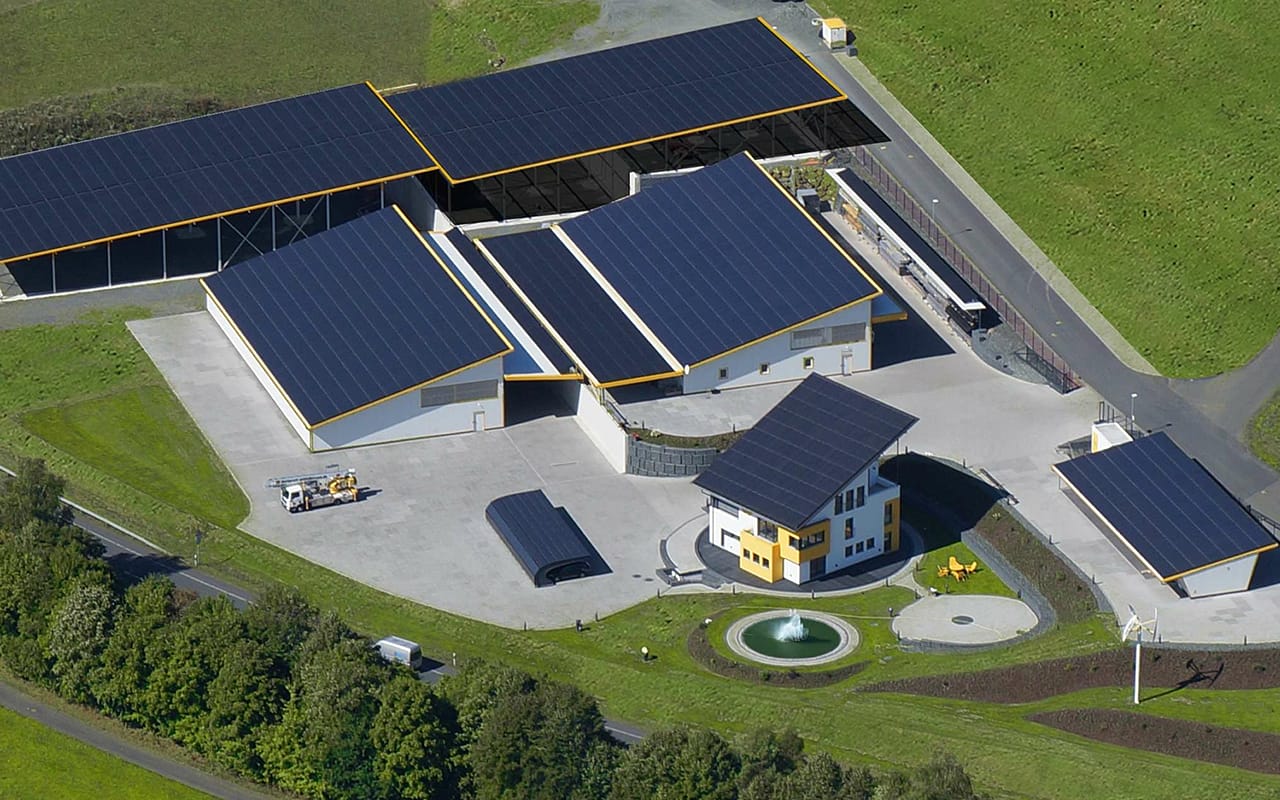
Solar modules use the sun's radiant energy directly to generate electricity. Natural factors - such as global radiation - have an influence on the PV yield that you cannot control. The nominal power of your PV system depends largely on the characteristics of your roof surface. You can influence the nominal power and the PV yield by optimising technical factors. This includes the selection of inverters and solar modules.
Natural factors influencing photovoltaic yield
The intensity of the solar radiation depends on the location of the system:
- Radiation levels are higher in southern regions than in northern regions. This is true within Europe and Germany.
- Over the course of the day and a year, it increases in intensity and then decreases.
- The sun reaches its highest point around midday. The sunlight falls vertically on the solar modules.
- Late morning and early afternoon are also times when the PV yield is high.
- The days are longer in summer, which means there are more hours of sunshine.
Around 70 percent PV of the yield is generated in the summer months - regardless of the nominal output of the system and the number of solar modules.
What is global radiation and what is its significance?
The global radiation is very important for the PV yield: The radiation energy on cloudless summer days reaches up to 1000 watts per square metre. On cloudy winter days, it drops to five percent of the amount of energy. Depending on the location, the average radiation values in Germany vary between 900 and 1200 kilowatt hours per square metre per year.
Solar radiation means the rays from the sun hitting the solar modules. It is direct when, under clear skies, it is only attenuated by factors in the atmosphere. It is indirect when clouds, air molecules and aerosols scatter the sun's rays. As a result, this light appears diffuse to the observer. Analogous to the use of a diffuser in photography, no shadow is cast. Global radiation is composed of direct and indirect solar radiation. On an annual average, the proportions are 50 percent each.
Technical factors influencing nominal power and PV yield
In addition to natural factors, technical factors have a great influence on the nominal power and the PV yield of your system. One of these is the efficiency of the solar modules. Optimising the nominal power and the PV yield requires technical knowledge from an expert.
Solar modules - selection, orientation, shading
In order to optimise the PV yield of a system, the selection of the solar modules plays an important role. Their efficiency determines whether a PV system generates stable yields in times of low solar radiation. The average efficiency is currently 18 percent with peak values of 22 percent. Investing in efficient solar modules increases the nominal output of a system measured in kilowatts peak and pays off in the long term.
You will achieve the maximum PV yield if you give your solar modules an angle of inclination of 30 degrees and orient them towards the south. If the angle deviates, you reduce the PV yield slightly: If the solar modules deviate 45 degrees from the optimal southern orientation, the PV yield is 95 percent of the maximum. An angle of inclination of the solar modules of 60 degrees results in a maximum yield of 90 percent. It is worthwhile to check in each individual case to what extent the roof surfaces are suitable for a photovoltaic system. It is important that you can elevate the modules in case of doubt. Higher neighbouring buildings, trees, chimneys and other obstacles provide shade (at least temporarily) for the solar system and reduce the photovoltaic yield.
Is my roof suitable for a photovoltaic system?
To check whether your roof is suitable for a PV system, you should check it against these points:
- The roof faces south, southwest or southeast.
For information: North-facing roofs also deliver good PV yields, the decisive factor is a flat angle of inclination of the solar modules. - The roof surface has an angle between 30 and 60 degrees. As a guide, gable roofs have a standard pitch angle of between 38 and 45 degrees.
- There are no obstructions and the roof is largely without shade.
- They have a roof area of 15 square metres or more to mount solar modules.
For information: A system with a nominal output of between two and three kilowatts peak can be installed on this area.
Inverters make the electricity usable
Every PV system requires an inverter. Solar modules generate direct current. However, electrical consumers such as household appliances require alternating current. An inverter converts the direct current into alternating current. Depending on the rated power of your system and your individual requirements, you have the choice of installing one or more inverters. How many inverters are actually necessary depends on the specific system and the demand. Therefore, no general statement can be made here. It always makes sense to install several inverters to prevent the complete failure of the PV system in the event of defects.
Wiring and selection of cables
There are technical options to optimise a PV system when shade temporarily or permanently affects the solar modules. Bypass diodes instead of strings connect the solar modules in series and enable a parallel connection that bridges shaded areas. One disadvantage, however, is the cable lengths, as all solar modules have to be connected to the inverter. As a result, power losses occur.
If you separate constantly shaded module areas on the inverter, you will significantly increase the PV yield. The same applies if you install several inverters for a PV system. Temporary and alternating shading can be controlled by installing power optimisers.
What is the best way to measure the PV yield?
Information about the PV yield in kilowatt hours can be obtained by simple reading and comparison with the nominal output. If a system is not active for the time being, the value can be estimated depending on the location and the system parameters. The specific yield can be used to compare the PV yield of PV systems of different sizes. The specific yield results from the comparison of the electricity production within one year with the nominal output.
About the author
TRITEC has been a leading photovoltaic wholesaler and reliable partner for PV, construction companies and investors worldwide for over 34 years. With many years of experience in photovoltaic system wholesale and large-scale plant construction, TRITEC offers innovative photovoltaic system solutions, efficient PV, precise planning tools and comprehensive performance controls for solar systems. The product portfolio also includes high-quality branded products from renowned photovoltaic manufacturers. With this technical expertise and a wide range of photovoltaic components, TRITEC supports customers in the successful implementation of sustainable solar projects.